

The pressure is on companies to realize ROI from investments in AI, automation, blockchain, networked devices and enhanced cybersecurity—and to bring in talent that makes this happen, quickly. Yet, while infusing talent for effective digital transformation is a top priority, it is easier said than done.
So writes Harley Lippman, Founder and CEO of Genesis10, and member of the Forbes Human Resources Council, in an article posted on Forbes.com, “Why Workforce Strategy Wins In The War For Talent.” Lippman is a regular contributor to the site.

In the article, Lippman writes, “Even though companies are feeling the heat to realize the ROI from investments in digital transformation initiatives, if they don’t believe that they can attract people who can make the new technologies work, then the risk and uncertainty in pulling the trigger on purchases can be crippling…Is it riskier to do nothing?”
What’s required of leaders is to first understand the trends that breed the risk and uncertainty that prevents companies from reaping the benefits of digital transformation, Lippman writes. In the article, he examines the underlying drivers of workforce risk and uncertainty: Immigration reform, the talent squeeze, talent misrepresentation, the changing IT landscape and training and professional development.
“These challenges require companies to think beyond recruiting and culture,” Lippman writes. “The business imperative is to build for tomorrow through sophisticated workforce and location strategies.”
Forbes Human Resources Council is an invitation-only, fee-based organization for senior-level human resources executives across all industries.
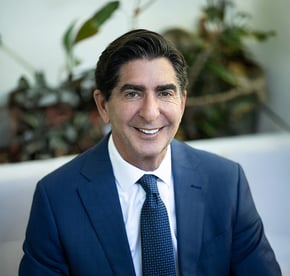
Harley’s leadership extends beyond business. He serves on the boards of leading business, academic, and policy institutions. His appointments include the U.S. Agency for International Development’s Partnership for Peace Advisory Board, where he helps advance efforts to foster trust and cooperation between Israelis and Palestinians. He has also served, by presidential appointment and Senate confirmation, on the U.S. Commission for the Preservation of America’s Heritage Abroad under multiple administrations.
He sits on the boards or advisory councils of Yale University’s School of Management, Columbia University’s School of International and Public Affairs, the Brookings Institution, The Washington Institute, the Middle East Forum, and the American Israel Public Affairs Committee (AIPAC), where he serves on the Political Leadership Council and Executive Committee.
Previously, Harley served as public director of the New York Mercantile Exchange and held leadership positions with the American Jewish Congress and the America-Israel Friendship League.
A committed philanthropist, Harley is the sole financial supporter of an orphanage in Cambodia, where he has helped dozens of children access education and opportunity, including funding college tuition for many. He has also led efforts to identify and memorialize unmarked Holocaust mass graves in Eastern Europe, helping preserve the memory of those lost. His documentary, Safeguarding Memory, aired on PBS and received two awards for its impact and storytelling.
Harley continues to combine business leadership with civic responsibility, making lasting contributions to the fields of technology, education, diplomacy, and remembrance.
