
I had the chance to moderate a roundtable called Women in Technology -- What Can We Do Now? It focused on:
- Raising awareness for women in technology;
- Starting honest talks to move past barriers; and
- Giving each of us tools to help move our companies forward.
To explore this important topic, Genesis10 asked this panel to share its views. This topic will shape our workplace for years.
Summary
A Genesis10 roundtable on women in technology shows that awareness must lead to action. The impact of return to office on women can be a chance to model better habits, check how work is shared, and challenge bias. The panel also calls for early exposure to tech, ongoing self-investment, and culture change by example. Women in tech statistics show only 5% of Fortune 1000 CTOs are women, so the gender gap in technology needs action across the company.



By the numbers, NCWIT says only 5% of CTOs at Fortune 1000 companies are women.
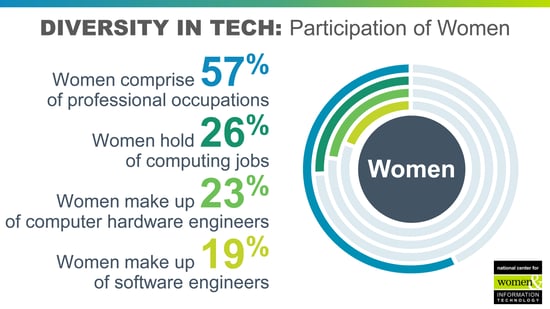
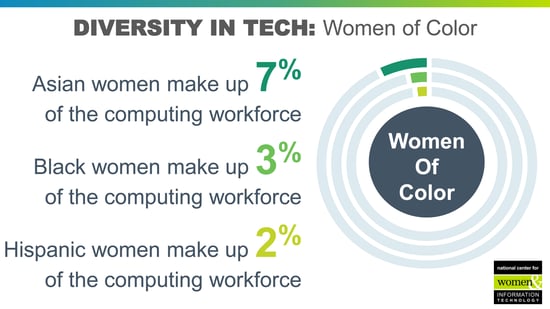
As professionals, we need to remember that a diverse team is not always inclusive, and it is not always fair.
Diversity and inclusion in tech still takes work.
As the panel moderator, I do not think this post fully covers the issues. The one-hour talk gave us insight after insight.
I encourage you to listen to the recording and hear from Mackenzie Peters, a Genesis10 Dev10 associate, who shares how she began as a graphic design student and later took coding classes. That sparked a career shift into coding. Three months after graduation, Mackenzie became a certified full-stack developer at one of the top employers in Milwaukee. Her advice: invest in yourself, no matter where you are in your career.
Oddly enough, Mackenzie was not pushed toward coding by a mentor, college counselor, or professor. To make real change, we need to expose young people to coding and other tech jobs as early as elementary school. As the old saying goes, we do not know what we do not know.
As a parent, I strongly support encouraging my daughters to take a class or a summer camp to build exposure. Building on Mackenzie's advice to invest in yourself, other actionable tactics from the panel include:
Use return to office to model new behavior
Eric Simonson said the talent shortage, hiring choices, how work is assigned, and the disruption from the pandemic all open the door for change. He also said that when we solve problems for women, we need to think more broadly. He said we have a chance to make work better for everyone.
Dig into the data
Mandy O'Dell said she is a big fan of data, but data can hide reality. The numbers matter, but they have limits. We need to understand the type of work women are doing.
Don't self-limit or let bias cloud your thinking
Terry Hogan said long-running social bias is the cause. Even when we think we are not biased, we may still hold ideas about who fits a role or how people should act at work based on gender and job.
At a time when news stories often point to a hostile or toxic workplace, culture is a business need. A single effort, such as Diversity and Inclusion Training or naming a Chief Diversity Officer, will not fix the issue or close the gender gap. To think in new ways, we need to talk about social bias so we can:
- Create awareness;
- Look to each other and to leaders for the right behavior; and
- Be intentional about change.
Q&A
Question: What was the purpose of the Genesis10 Women in Technology roundtable?
Answer: To move from awareness to action by raising visibility, starting honest talks about barriers, and giving people practical steps that support inclusion and equity, not just diversity, in tech leadership.
Question: How can return to office (RTO) be used to advance inclusion?
Answer: Treat RTO as a reset. Rework how tasks are assigned, how teams work together, and how leaders show up so the return to office helps make work better for everyone.
Question: Why is it important to dig into the data, and what should leaders look for?
Answer: Topline numbers can hide reality. Look beyond headcounts at the work women do, who gets stretch work, and how chances are shared, so choices reflect nuance and not just averages.
Question: What role do self-limiting beliefs and societal biases play, and how should organizations respond?
Answer: Long-held bias shapes ideas about who fits a role. Bring it out in the open: build awareness, have leaders model inclusive behavior, and be intentional about change. One-time training or a single new role is not enough.
Question: Why emphasize early exposure to technology and personal investment in skills?
Answer: People do not know what they do not know. Early exposure, starting in elementary school through classes or camps, opens paths into tech. Ongoing self-investment at any career stage, like Mackenzie Peters' move into full-stack development, helps people enter and grow in a field where women in tech statistics still show the gender gap in technology.