
Since the pandemic, executives and employees have debated work from home and hybrid work. Some want the office. Others want the freedom of remote work.
The debate stayed in the news after Covid eased. A new wave of layoffs at Meta and Mark Zuckerberg's year of efficiency brought fresh attention to remote work policy.
Many CEOs say work from home is less efficient. They believe the office is more collaborative and helps companies grow.
Employees disagree. They say they can join meetings, talk with coworkers, and finish their tasks from home. Some leaders say remote work can lift productivity and cut office costs. Others later regret shrinking their office space.
In the end, there are many views on the issue. I have my own view because I started my career during the pandemic.
Summary
Remote and hybrid work can save time and money. But they can also bring real working from home disadvantages for early-career staff. Young professionals may miss mentorship, office visibility, and relationship-building chances when they start from home. That can make learning harder and confidence slower to grow, especially during remote onboarding challenges.
Young workers at a disadvantage
Yes. People who started entry-level jobs in the last three years are at a disadvantage compared with senior peers. Remote work is convenient, but it can make the learning curve steeper. Most cannot get the same mentorship you'd find in person, nor do you have access to these senior coworkers when you need help with new tasks.
Why proving your work ethic is harder
In a remote setting, people are harder to notice and less likely to get quick praise than in an office. Starting a full-time career from a laptop is less hands-on than showing up in person, where there are more resources and more chances to learn by watching others.
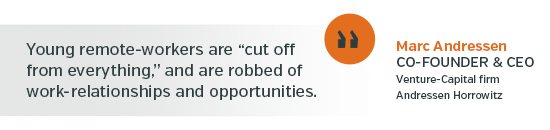
Marc Andreessen, co-founder and CEO of Andreessen Horowitz, has said young remote workers are cut off from everything. He argues that remote work can limit work relationships and career chances. Some young workers may still do well from home, but many will feel the gap between Gen X and Gen Z over time.
Q&A
Question: What is the main concern about young professionals starting their careers remotely?
Answer: The article says they may face a steeper learning curve. They often get less mentorship, less informal guidance, and less help from senior coworkers. Without the office, it can be harder to ask quick questions, build confidence, and learn by watching others.
Question: Why does the article suggest that proving work ethic is harder in a remote environment?
Answer: In an office, effort and reliability are easier to see. In a remote setting, those traits may be less visible, especially for entry-level workers who are still building a name for themselves.
Question: Does the article argue that remote work is always bad?
Answer: No. The article says remote work can be convenient and can save money. It also notes that some companies have seen better productivity. Still, it argues that many early-career workers lose important learning and relationship-building chances.
Question: What role does mentorship play in the article's view of office work?
Answer: Mentorship is one of the biggest benefits of working in person. The article says entry-level workers gain from easier access to senior coworkers, hands-on guidance, and the chance to learn by being near more experienced people.
Question: Why does the article mention the debate between CEOs and employees?
Answer: It shows why the issue is still active. CEOs often worry that remote work hurts efficiency and teamwork, while employees say they can still do meetings, communication, and tasks from home. That tension helps explain the article's focus on what can be lost when work becomes fully remote.