The technology landscape is moving at the speed of light, placing greater demands on the IT team to develop and deliver efficient and effective solutions with incredible accuracy and minimal efforts. How many of you are nodding your head or smirking because this is your reality?
All organizations, especially software development teams, require speed in order to stay in front of the competition. Otherwise the alternative is "I win and you lose, with reputation and performance at risk."
Why integrate test automation into the DevOps process:
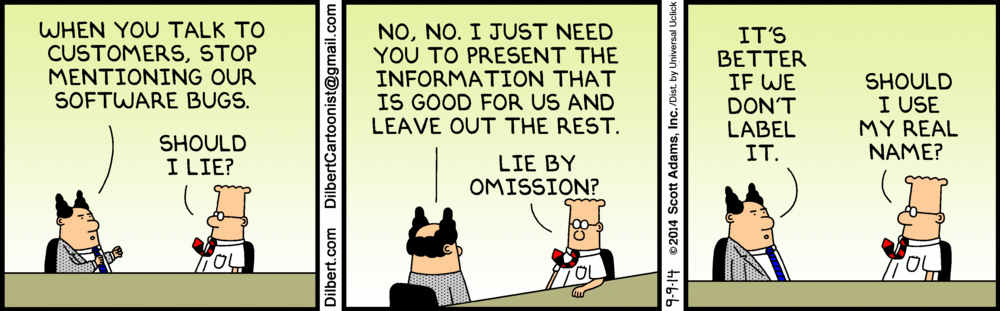
When all else fails, take advice from Dilbert.... Don't lie and don't look the other way. Address the bugs.
Application leaders are requiring the use of test automation as part of the toolchain not only to succeed with DevOps initiative(s) but, moreover, to accelerate, scale and enable continuous testing, which is essential for DevOps. Across the development and IT operation team(s) there is a shared goal which is: build, test and release software in a more reliable manner. Simply put, DevOps addressed the dysfunctional nature of how teams operated and the cultural silos bred within organizations by breaking down barriers and fostering an environment of collaboration, improved workflow management, shared goals, and trust among teams. This focus on devops test automation helps teams standardize and strengthen quality gates.
Integrating test automation engineers with strong test automation engineer skills into the DevOps team and culture has become a business imperative for delivery success.
These reflect test automation best practices.
Answer: It accelerates delivery, improves testing accuracy, and strengthens collaboration by breaking down silos. In DevOps, continuous testing is critical; automation enables it at scale, helping teams standardize and reinforce quality gates so software can be built, tested, and released more reliably. This makes skilled test automation a business imperative for successful delivery.
Answer: Automated test scripts are executed by CI/CD tools to streamline the build–deploy–test cycle on an ongoing basis. When test scripts are created in parallel with development, they can run automatically as part of each integration and delivery step, enabling continuous testing and faster, more reliable feedback across development and operations.
Answer: They need a deep understanding of application functionality, the technical landscape, and test automation tools, plus the ability to author scripts alongside active development. They should also apply protocol knowledge to execute those scripts via CI/CD tools while collaborating closely with both development and operations.
Answer: AI-driven test automation is an emerging trend that aims to provide more autonomous testing. Many tools are incorporating decision-tree-like approaches to simplify test creation and maintenance, helping teams scale automation, reduce upkeep, and keep pace with rapid delivery cycles.
Answer: Every 6 to 12 months. Regular reviews ensure your tool capabilities and vendor roadmap continue to align with your organization’s expectations, plans, and overall roadmap, so you can maintain acceleration, accuracy, and effective continuous testing as needs evolve.